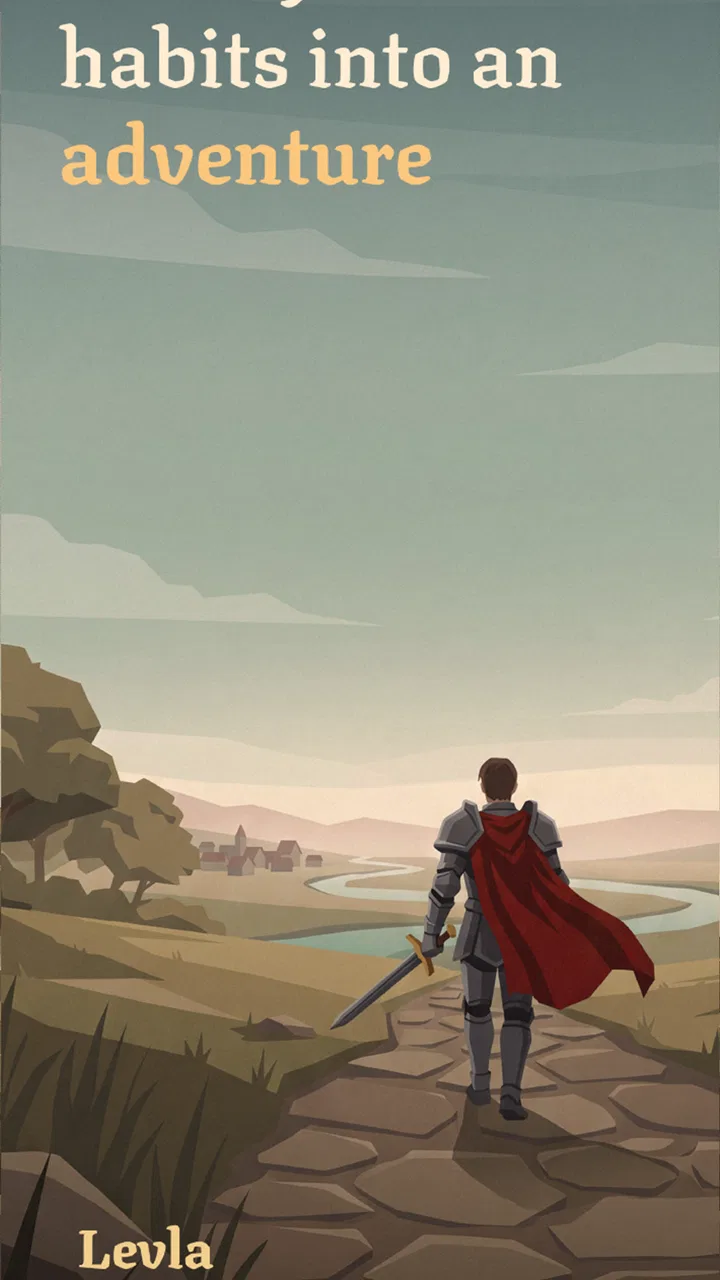
Levla: Habit Tracker RPG
- 4.8
- Rating
- 10.00K
- Installs
- Free
- Price

 Analysis by App-foxy
I know the feeling of opening a habit tracker with good intentions, adding a few goals, and then quietly abandoning it when the routine becomes another chore to manage. Levla: Habit Tracker RPG takes a different route. Instead of presenting progress as a plain checklist, it frames everyday habits through the language of role-playing games, turning completed actions into progress for a character. That idea sounds simple, but it changes the emotional weight of checking something off.
After spending time with it, I see the main appeal less as “gamifying everything” and more as reducing the resistance that makes ordinary habit tools easy to ignore. A normal tracker asks me to care about a streak or a percentage. Levla gives the action a more immediate sense of purpose: I am not only recording that I went for a walk or studied; I am moving a character forward. For people who respond well to visible progression, that can make repetition feel less dull.
Levla is a free productivity app from Turbo Labs SE, aimed at anyone who wants to build routines with a little more personality. It is rated for Everyone and currently has a 4.8 average from around 470 ratings, with more than 10 thousand installs. Those figures suggest a small but enthusiastic audience rather than a long-established mainstream service. The app is at version 1.0.4 and runs on Android 8.0 or later, so compatibility should cover many still-used Android phones.
You May Also Like

 Blood Strike: 2.5 Anniversary
Blood Strike’s Loadouts Turn Every Drop Into a Tactical Gamble
A close look at Blood Strike’s custom loadouts: how fast access to signature weapons reshapes its battle royale rhythm, rewards preparation, and narrows the gap between fights.

 Pandora - Music & Podcasts
Pandora’s Music Is Easy to Start, but Harder to Recover
Pandora’s strength is its low-effort path from a seed to a station. Its weak spot is how much confidence it asks you to place in connection, setup, and quiet recovery.

 8 Ball Pool
 Is Built on Rivalries, Rematches, and Routine
A close look at the rivalries, rematches, shared routines, and unanswered safety questions that turn a quick pool match into a persistent mobile community.

 Samsung Music
’s Quiet Strength Is Playing What You Already Own
Its reach comes less from spectacle than from dependable access to a personal library. That simplicity is both the app’s strongest retention engine and its ceiling.

 AccuWeather: Weather Radar
AccuWeather Review: A Quick, Clear Forecast for Everyday Decisions
For everyday plans, the best forecast is the one you can understand quickly. AccuWeather makes rain timing, radar, and local conditions easy to act on, with a few trade-offs.

 Hill Climb Racing
Why Hill Climb Racing Still Turns Crashes Into One More Run
A tiny car, a bumpy hill and one more upgrade: Hill Climb Racing keeps resurfacing because its simple chaos makes every near-miss feel personal.
More From Our News Desk
View All News


Why ordinary habit tracking often breaks down
The recurring problem is rarely a lack of knowledge. Most people already know they should drink more water, move regularly, practice a skill, sleep at a sensible time, or spend less time scrolling. The difficult part is making those actions visible and rewarding enough to repeat when motivation is low.
Traditional productivity apps are excellent when the job is scheduling. I use them for appointments, deadlines, shopping lists, and tasks with a clear finish line. Habits are different. A task can be completed once; a habit has to be revisited, often without any immediate reward. A checkbox can confirm that I did something, but it does not necessarily make tomorrow’s repetition feel worthwhile.
Levla’s RPG framing is useful because it gives the routine a broader story. The action is still small, but it belongs to a character’s development. That distinction matters for users who find charts and streak counters too clinical. Seeing a habit as a contribution to a virtual identity can be more motivating than watching another percentage rise by a small amount.
There is also a practical benefit to the theme. A habit tracker can become a second job if it demands too much categorizing, reviewing, and adjusting. The strongest version of this concept should make the decision easy: choose the behavior, complete it, and enjoy the sense of progress. In my experience, Levla is most appealing when I treat it as a lightweight daily companion rather than a complete life-management system.
Starting with a routine instead of a fantasy character
The first useful setup is not to recreate my entire life inside the app. I would begin with one or two behaviors that are clear enough to recognize without debate. “Read for a while” is less reliable than a specific reading session. “Be healthier” is too broad to check honestly. A focused habit gives the RPG layer something concrete to reinforce.
This is one of the most important ways to avoid turning Levla into another abandoned project. If I add every improvement I want at once, the novelty quickly becomes administrative work. A smaller starting set lets me learn whether the character-progression idea actually helps my behavior. It also makes missed actions easier to interpret: I can see whether the problem is the habit itself, the reminder pattern, or the app’s motivational style.
The setup is best approached as a test of fit. Someone who enjoys games may instinctively want a large list of goals, but the better experiment is to choose the habit that most often slips through the cracks. If the app makes that one easier to revisit, it has already earned a place in the routine.
I would also separate habits by effort. A daily action that takes a few minutes should not be mentally grouped with a demanding workout or a long study block. The RPG presentation may make both feel like progress, but the real-world cost remains different. Keeping that distinction in mind prevents me from overestimating what a virtual reward can accomplish.
Using the app during ordinary days
Imagine a weekday when I finish work tired and still want to practice a language. A conventional task list may show the item alongside bills, messages, and errands. It becomes one more obligation competing for attention. In Levla, the same action is connected to the character I am developing. That small change can be enough to get me started, especially when the session is short and the goal is already defined.
Another realistic scenario is exercise. I may not have the energy for a full workout, but I can still complete a modest movement habit. The app does not need to convince me that a small action is equivalent to a major achievement. Its value is that it gives the small action a place in an ongoing progression, making “something” feel more meaningful than “nothing.”
It can also suit household routines that are easy to postpone. Tidying a desk, preparing for the next morning, or setting aside time for a personal project may not feel exciting enough for a conventional reward system. The RPG angle adds a layer of play without requiring me to turn the task into a complicated challenge.
The best daily workflow is quick: open the app at a natural transition, record what I completed, and leave. I would not use it as a diary or spend several minutes inspecting progress after every action. The more often a productivity tool interrupts the behavior it is supposed to support, the less useful it becomes.
Where Levla removes friction
The most valuable friction it removes is emotional rather than technical. A missed habit in a standard tracker can feel like a broken streak, which sometimes encourages an all-or-nothing reaction. The RPG framing gives me a reason to return because the character’s broader journey is still there. One imperfect day does not have to define the whole attempt.
That makes the app particularly suitable for beginners who dislike the pressure of rigid streak systems. If a missed day causes me to quit entirely, a more forgiving sense of progression is preferable. I can resume without treating the routine as ruined.
A second useful insight is to use the character as a cue for identity-based habits. Rather than thinking only, “I need to complete this task,” I can connect it with the person I want to become: someone who reads regularly, trains consistently, or protects time for creative work. Levla cannot create that identity on its own, but the game layer gives the idea a visible place in my daily check-in.
A third insight is to use it at the point where a habit usually fails, not only at the end of the day. If I tend to forget an evening routine, checking the app before dinner may work better than remembering just before bed. The app’s value depends heavily on when I interact with it. A tracker that is opened after the decision has already passed is less useful than one used as a prompt before the behavior.
There is a trade-off here. Gamification can make repetition more inviting, but it can also become the main attraction. If I start chasing virtual progress while choosing habits that do not matter to me, the system becomes entertainment instead of support. The real-world behavior must remain the point.
How it compares with familiar alternatives
Compared with a basic checklist, Levla is stronger when motivation and emotional engagement are the main obstacles. A checklist is faster for one-off errands and clearer for deadlines, but it rarely gives repeated actions a sense of development. I would keep a standard task manager for appointments and project steps, then use Levla for behaviors that need regular encouragement.
Compared with a calendar, the difference is even clearer. Calendars answer the question, “When must this happen?” Levla is better suited to, “What do I want to keep doing?” A calendar remains the better choice for time-specific commitments. Levla makes more sense when the exact hour is flexible but consistency matters.
Compared with a minimalist habit tracker, Levla trades some neutrality for personality. Minimal tools can be ideal for users who want nothing between them and a record of completion. Levla is the better fit if a plain grid feels lifeless. It is not automatically better; it depends on whether the game layer motivates me or feels like decoration.
Compared with a full productivity suite, it is narrower and potentially easier to approach. A large system can combine tasks, notes, calendars, projects, and routines, but that breadth often introduces setup overhead. Levla’s focused identity is an advantage for someone who wants a habit-oriented experience without building a complicated personal operating system.
Who will enjoy the RPG approach
I would recommend Levla to people who already understand their goals but struggle to repeat the small actions behind them. It is especially promising for users who enjoy role-playing games, progression systems, or character development and want that feeling applied to real-life routines.
It may also help someone returning to habits after a long break. Starting again can feel discouraging when an old streak or record is gone. A character-centered approach offers a fresh reason to continue without requiring the user to pretend that every day has been perfect.
The app is also approachable for younger users because its age rating is Everyone, although the usefulness still depends on choosing sensible habits and keeping expectations realistic. Parents or educators looking at it as a routine aid should focus on the behavior being encouraged, not simply on the game theme.
I would be more cautious about recommending it to people who dislike gamification, want detailed analytics, or need a tightly integrated planner for work and appointments. If the idea of earning progress from real-life actions feels artificial, the theme may add friction rather than remove it. In that case, a plain tracker or calendar could be more comfortable and more efficient.
Costs, version, and practical expectations
Levla can be installed for free, which makes it easy to test without committing money at the beginning. The app includes in-app purchases ranging from $5.99 to $149.99 per item, so I would pay attention to the purchase screen and understand what is optional before buying anything. The free entry point is useful, but the presence of purchases means the complete experience may involve decisions beyond simply installing the app.
The current version is 1.0.4, which places the app in an early stage of its development. That is not automatically a weakness. A focused app can already be useful at an early version, but I would approach it with the expectation that polish and depth may evolve over time. The Android requirement of 8.0 or later is reasonably broad, though anyone using an older device will need to check compatibility before planning around it.
Turbo Labs SE has chosen a clear concept rather than presenting Levla as every productivity tool at once. That focus is a strength, but it also means I would not expect it to replace my calendar, notes app, or project manager. Its job is narrower: make repeated personal actions feel easier to return to.
My verdict after looking past the novelty
The real test is whether the game layer gets me to perform the habit before I need the reward. If it does, Levla has a meaningful advantage over a lifeless checklist. The character progression gives small actions a thread of continuity, and that can be enough to make a routine feel less disposable.
I like the app most as a low-pressure companion for a small number of habits. I would not overload it, use it as my only planning tool, or assume that virtual progression can compensate for unrealistic goals. Its strength is not advanced project management; it is the emotional nudge that makes repetition easier to approach.
There is still a personal compatibility question. Some users will find the RPG framing motivating, while others will see it as an extra layer between an action and its record. The in-app purchase range also deserves attention before spending, particularly for anyone expecting a completely minimal experience. Those are genuine considerations, not reasons to dismiss the app.
For me, Levla succeeds when I use it at a transition point in the day, keep the habits specific, and treat the character as a reminder of progress rather than a substitute for discipline. It is free to try, rated for Everyone, and focused enough to understand quickly. If ordinary trackers leave you cold and you enjoy the feeling of leveling up, Levla: Habit Tracker RPG is worth exploring. If you want a strict planner, detailed scheduling, or a completely game-free interface, I would choose a more conventional productivity tool instead.
FAQs for Levla: Habit Tracker RPG
01What is Levla: Habit Tracker RPG and how does it work?
Levla: Habit Tracker RPG combines habit tracking with role-playing game mechanics. You create habits or daily tasks, mark them as completed, and use your progress to develop an in-game character or adventure. Instead of relying only on reminders and checklists, the app adds rewards, progression, and a more playful sense of motivation to help make routines feel engaging and consistent.
02Is Levla: Habit Tracker RPG suitable for beginners who have never used a habit tracker?
Yes. Levla is generally approachable for beginners because its main idea is simple: choose habits, complete them, and record your progress. The RPG elements may take a little time to understand, especially if you are unfamiliar with gamified productivity apps, but the basic tracking process is straightforward. Starting with two or three realistic habits is recommended rather than creating an overwhelming list.
03What types of habits can I track in Levla?
You can use Levla to track many different routines, including exercise, reading, studying, meditation, drinking water, sleeping on schedule, household tasks, or personal goals. The app is most useful when habits are specific and measurable. For example, “walk for 20 minutes” is easier to track consistently than a broad goal such as “be healthier.” Your experience may depend on how carefully you configure each routine.
04Does Levla: Habit Tracker RPG require an internet connection or an account?
The exact requirements can depend on the current version of the app and the device platform. Basic habit logging may work without a constant connection, but features involving synchronization, backups, advertisements, purchases, or online services may require internet access. Before relying on the app for important records, check its latest store listing and privacy information to confirm whether account creation or cloud synchronization is necessary.
05Is Levla: Habit Tracker RPG free to download, and are there in-app purchases?
Levla may be available as a free download, but availability of premium features, advertisements, subscriptions, or one-time purchases can vary by platform and region. Users should review the app-store listing before installing and pay attention to any trial terms or recurring billing details. The free version should be evaluated first to see whether its habit-tracking and RPG features meet your needs.
Pros
- Turns daily habits into engaging RPG-style quests.
- Visual progress makes long-term goals easier to follow.
- Flexible habit setup supports different routines and objectives.
- Reward system can make small achievements feel motivating.
- Clean
- approachable design is easy to understand.
Cons
- Some useful features may be restricted behind in-app purchases.
- RPG rewards may feel repetitive after extended daily use.
- Requires consistent manual check-ins to keep progress accurate.
- Limited appeal for users who prefer simple
- non-gamified trackers.
- Missed habits can make the progress system feel discouraging.

Levla: Habit Tracker RPG
Gallery